 Dealer Locator








 As Seen On
 Instructions & Troubleshooting
 Shipping & Returns
 Warranty
 FAQ
FAQ Contact Us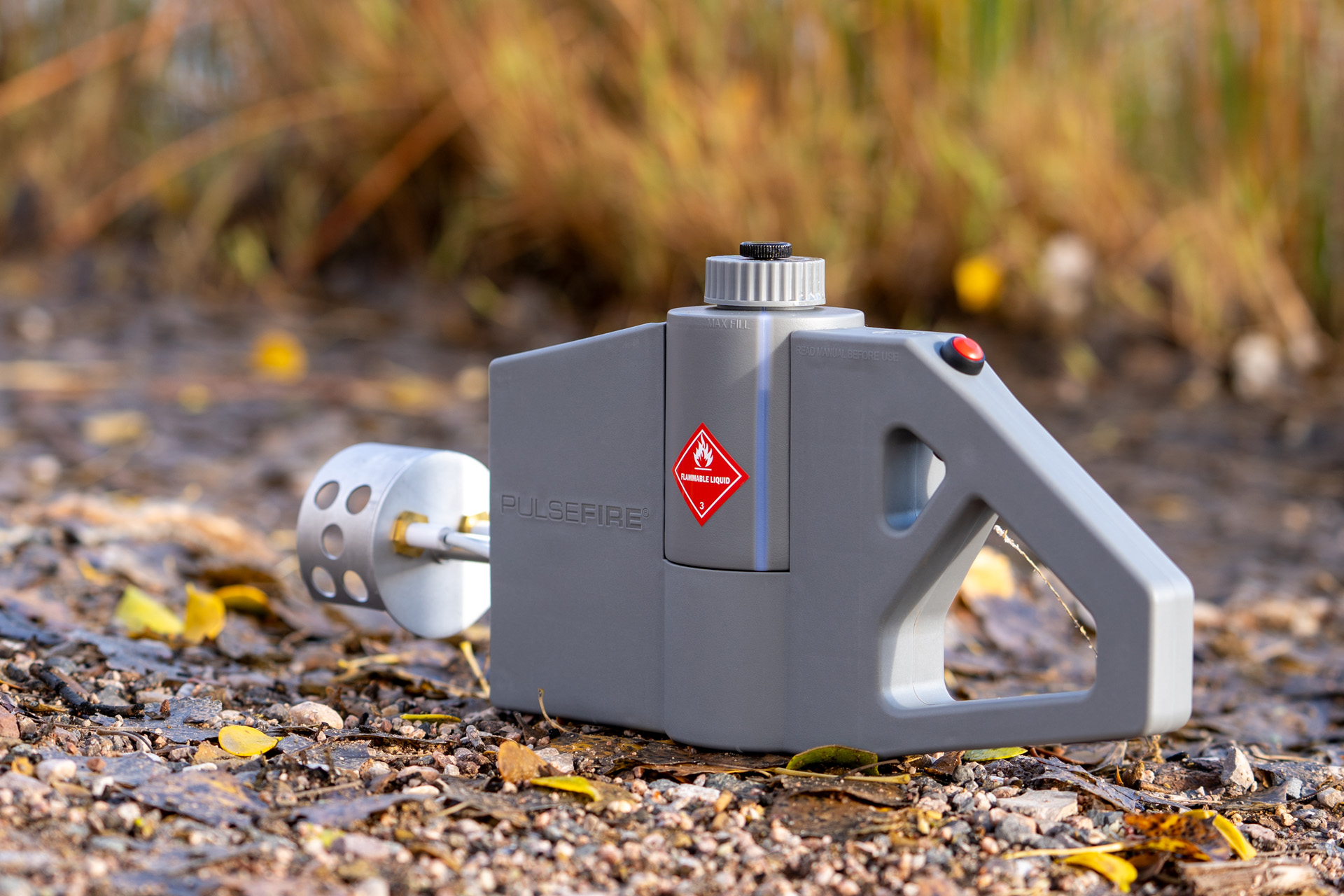
Instructions & Troubleshooting > Pulsefire® Compact
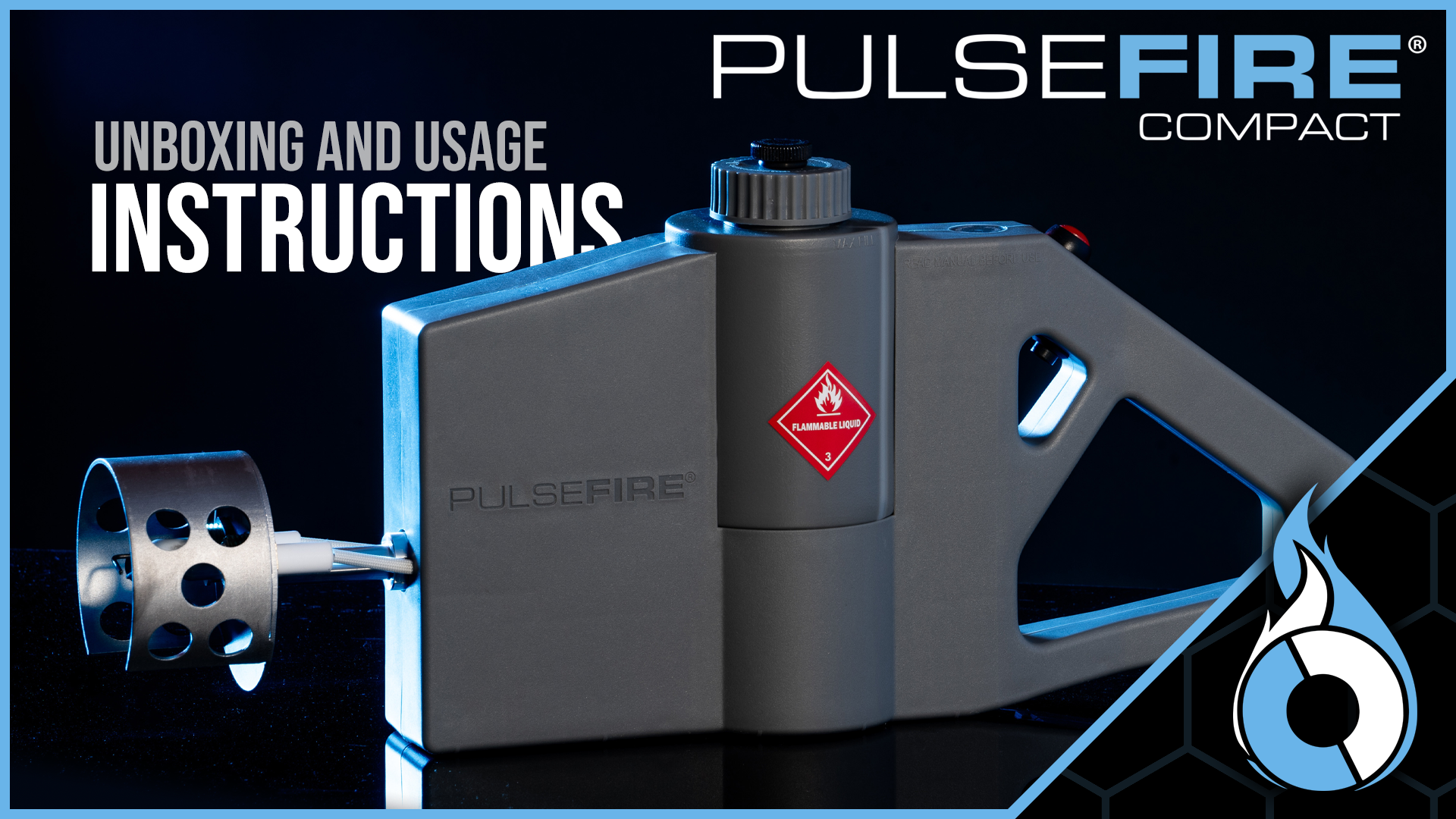
The Compact has a 1-year limited warranty. This troubleshooting information is provided to help you determine the cause of any problems you might experience. If you are experiencing a problem that may require service, contact us and we’d be glad to help.
COMMON CONCERNS
The spark/arc is occurring, but the fuel is not being ignited consistently.
If the spark/arc is occurring and the fuel is not being ignited, it is due to one or more of the following:
1. The outside temperature is too cold, causing minimal fuel vapor to be present. If you are trying to operate in very cold temperatures, wiggling the unit during operation can help put more flammable droplets into the arc when the stream is not producing enough vapor.
2. The fuel is not flammable. The Compact is only rated for gasoline. Fuel vapor is required for ignition to occur, and the Compact’s arc does not impart as much heat into the stream as the LRT/UBF.
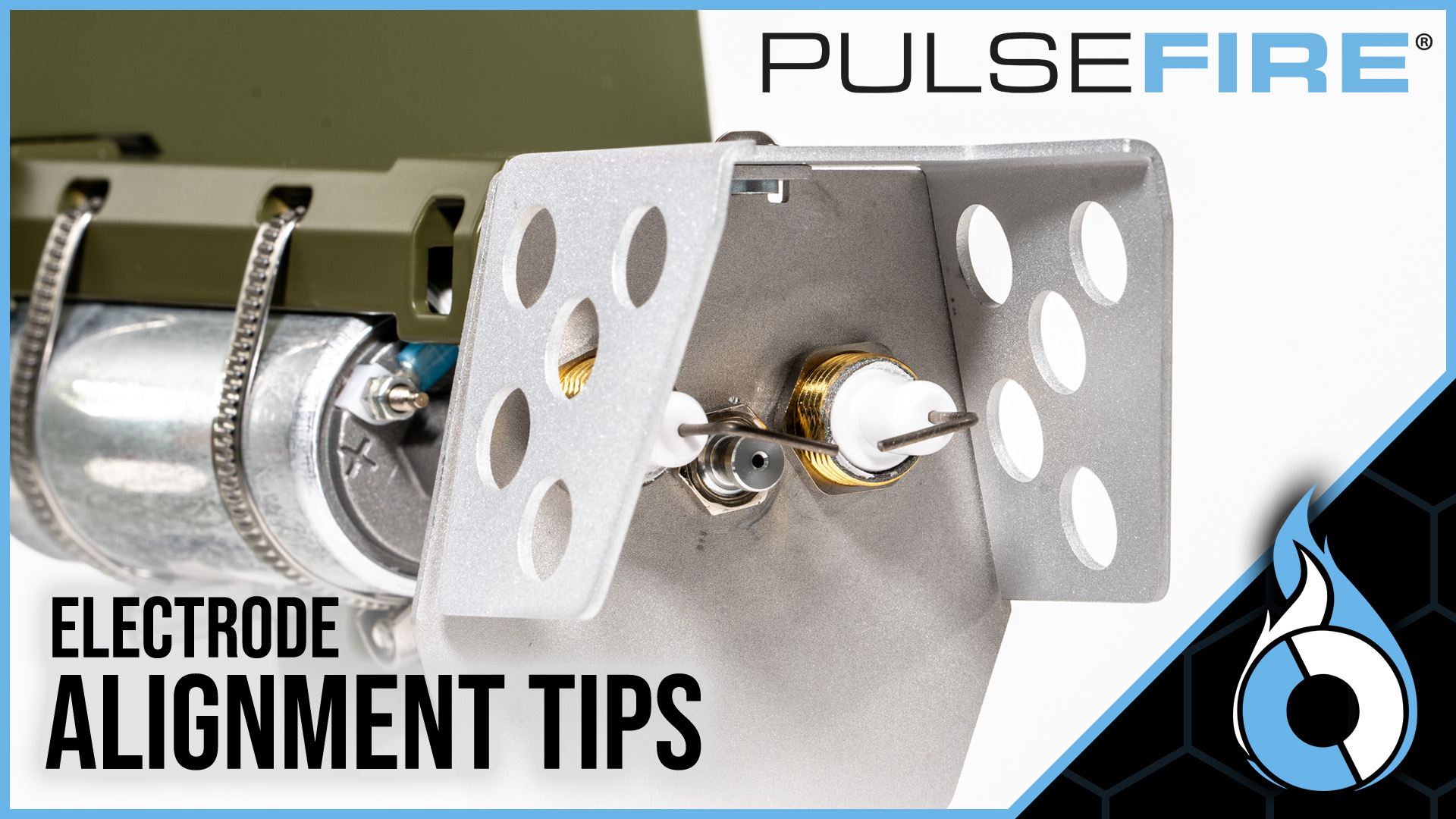
3. The electrodes are not positioned optimally. This becomes more important as the temperature drops or it’s breezy, as that fuel vapor needs to be in the path of the spark. See the Electrode Alignment diagram.
No spark is occurring, and/or I'm being shocked during use.
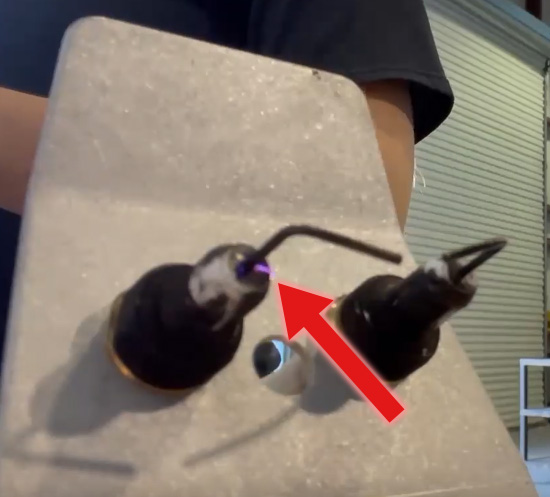
Ensure the electrode insulators are clean and white, not covered in black carbon.
If the issue persists after they are clean, something else is going on such as a cut/pinched wire, loose connection, or bad transformer. Contact us and include a picture of your electrodes, and we’ll investigate and resolve the issue for you.
The stream of fire is shorter than expected.
The system should be able to produce a continuous appearing blast of flaming fuel 15 feet in length at the beginning of each blast you send. When holding the trigger down, the fuel and flames will pull back slightly due to the fact that after the initial stream is emitted, fuel is being sent into an already existing fireball and thus burning up sooner.
If your system seems to suffer significantly shorter distances, one or more of the following is happening:
1. Wind is negatively affecting the stream’s consistency, causing it to scatter and atomize into droplets more easily and burn up faster. If you have access to an indoor warehouse or otherwise windless environment, place a rock or other marker at the 15 foot mark and have someone film from the side as you send a few 2 second bursts. If it doesn’t reach the marker in a windless environment, consider items 2 and 3 below.
2. The stream is contacting one of the electrode tips. If the stream physically contacts the electrode tips, it will cause a severe reduction in performance as it scatters and breaks the stream immediately as it exits the nozzle. Adjust the electrodes so there is room for the stream to pass by. Video instructions are available on the Videos tab of this page.
3. There is a problem or obstruction with the fuel system (solenoid valve, pump, or nozzle). Either something’s clogging things up, a valve is stuck partially open, or the pump has an issue. Contact us and we’ll figure it out quick.
Fuel drips out of the nozzle between uses.
There’s always a small amount of fuel inside the nozzle itself between the exit orifice and where the solenoid valve seals, which is why the nozzle end can often act like a candle until you blow it out.
If things are leaking out continuously, the solenoid valve may be stuck partially open (debris inside or another issue). Contact us for support.
Some fuel ends up on the ground instead of burning up in the stream.
Nature of the beast. We’re sending a stream of fuel out of a nozzle at high speed with the goal of achieving maximum distance with the inputs supplied as well as being useful (igniting your target). To do so, enough fuel is required to maintain the stream’s range and support continued ignition of what you’re aiming at.
How much of the stream and the scattered particles around it ignite depends on temperature, humidity, wind, fuel pressure, fuel velocity, electrode position, nozzle geometry, etc.
No function when the trigger buttons are pressed.
Did you charge the battery pack? When new batteries are installed (including at the factory), the pack must be connected to USB-C power for a short period of time to recalibrate before the system will allow power flow.
Otherwise, contact us for support. It could be a loose connection, incorrectly installed batteries, or faulty battery management system.
 Torch Systems
 Accessories
 Gear
Gear Window Rests
 Parts
Parts